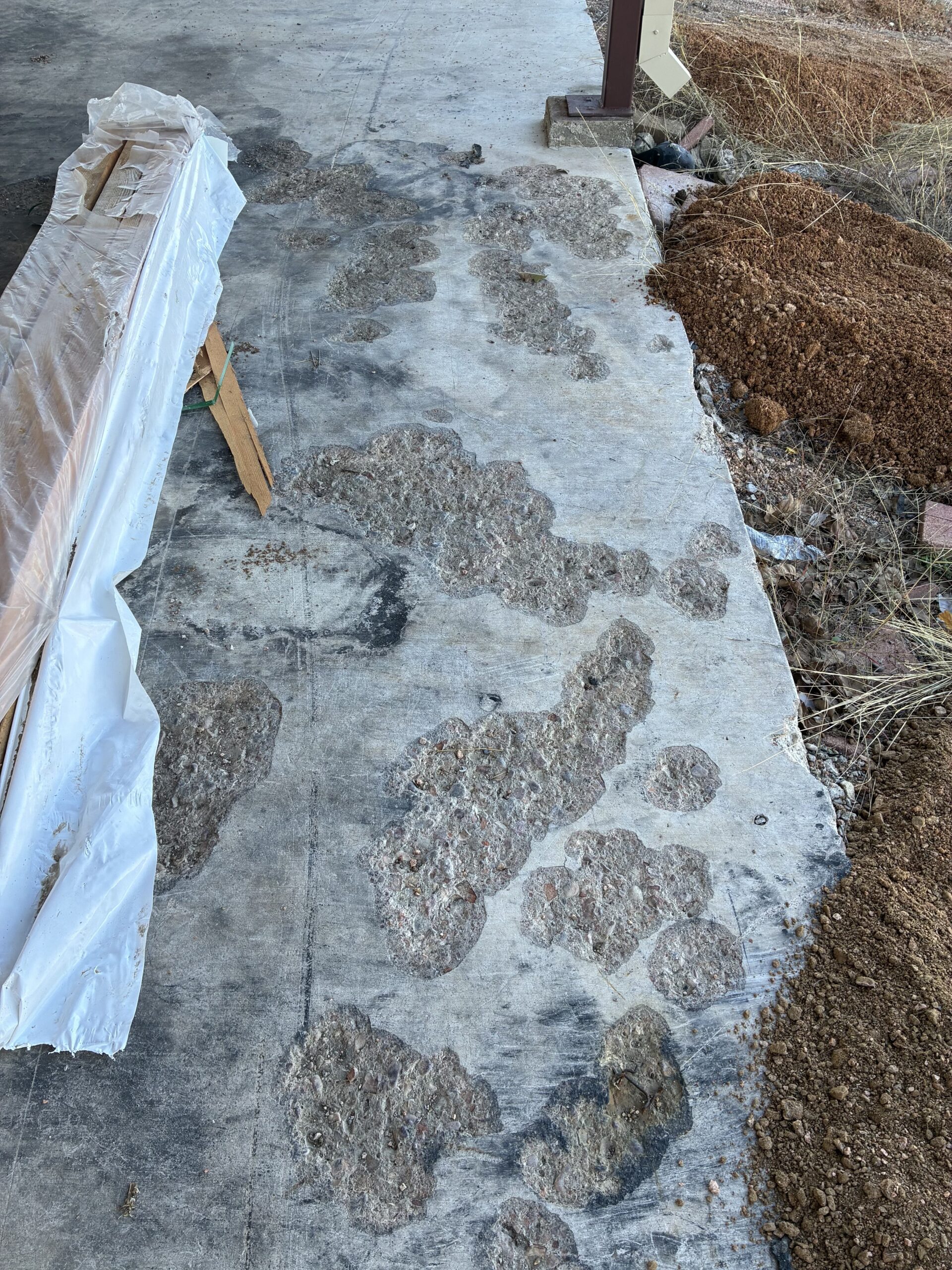
Concrete is tough, but even concrete has limits. When exposed to extreme temperatures, especially fires reaching 1,200–1,500°F, concrete can undergo a violent failure known as thermal spalling. To property owners, it often looks like the concrete “exploded,” leaving behind fractured layers, missing chunks, and a weakened slab beneath the surface.
At Private Label Coating (PLC), we specialize in diagnosing and restoring heat-damaged concrete so properties remain safe, stable, and structurally sound. Here’s what really happens when concrete overheats, and how PLC brings it back to life.
Why Concrete “Explodes” at High Temperatures
Concrete may look solid, but it’s actually a dense matrix of cement paste, aggregate, and moisture. When intense heat hits the surface, several things happen:
1. Rapid Moisture Expansion
Even dry-looking concrete contains moisture deep within its pores. At temperatures around 300–600°F, that moisture turns to steam. At 1,000–1,500°F, the pressure becomes so extreme that the internal steam rapidly expands, and the outer layer is literally blown off the slab. This is what causes that “exploded” or shattered appearance.
2. Loss of Cement Bond Strength
Cement paste begins breaking down around 600–800°F, and by 1,200°F the chemical structure is significantly weakened. The surface layer loses its strength and becomes brittle or powdery.
3. Aggregate Breakdown
Some aggregates expand or fracture under high heat, further contributing to cracking and spalling.
4. Steel Reinforcement Stress
If the slab contains rebar, extreme heat causes steel to expand. This can push against the surrounding concrete, causing additional cracking and delamination.
What Heat-Damaged Concrete Looks Like
After exposure to extreme heat, you’ll typically see:
- Exploded surface areas
- Large missing patches or pop-outs
- Deep cracking and delamination
- White, chalky, or brittle surface texture
- Weak areas that break apart under foot pressure
- Structural instability if rebar was affected
This isn’t cosmetic damage, it’s structural.
How PLC Repairs Heat-Damaged Concrete
Restoring fire or heat damaged concrete isn’t a simple patch job. It requires a step-by-step process to rebuild strength, ensure adhesion, and prevent future failures.
Here’s how Private Label Coating does it:
1. Full Inspection & Sound Testing
We determine how deep the thermal damage goes using:
- Hammer testing
- Moisture checks
- Delamination mapping
- Visual & structural evaluation
If the slab is compromised beyond the surface layer, deeper remediation is needed.
2. Remove All Weakened Concrete
All brittle, chalky, or delaminated concrete must be removed.
This is done with:
- Mechanical grinding
- Chipping
- Surface scarifying
We continue until we reach sound, stable concrete that will bond properly to repair materials.
3. Clean & Profile the Slab
Heat-damaged concrete often becomes dusty, weak, and contaminated.
PLC opens the pores and creates a proper profile so repair materials can adhere.
4. Apply Structural Repair Materials
Depending on the severity of damage, PLC uses:
- Polymer-modified resurfacing systems
- High-strength repair mortars
- Deep patch materials
- Crack injection or stabilization if needed
These materials restore structural integrity and outperform traditional patch mixes.
5. Resurface or Coat for Final Protection
To prevent future moisture intrusion and strengthen the slab, PLC finishes the repair with one of our advanced systems:
- Concrete resurfacing overlays
- Densify/Burnish/Guard system
- Industrial epoxy systems
- Polyaspartic topcoats
- Polymer-modified asphalt/concrete restoration (for exterior surfaces)
This creates a long-lasting, durable surface that resists heat, chemicals, wear, and weather.
Why This Matters
Heat-damaged concrete is not something to ignore. Leaving it untreated can cause:
- Spreading cracks
- Moisture intrusion
- Structural weakening
- Safety hazards
- Costly future repairs
With PLC’s restoration systems, the slab is rebuilt to be stronger, safer, and ready for long-term performance.
Trust PLC With Fire & Heat-Damaged Concrete
Whether it’s from a fire, industrial equipment, or extreme heat exposure, PLC has the systems and experience to restore concrete the right way, not with surface-level patches that fail within months.
If you’re dealing with damaged concrete or want an expert assessment, Private Label Coating is here to help.