• Luxury That Lasts: The Power of Metallic Epoxy Flooring

    Luxury That Lasts: The Power of Metallic Epoxy Flooring

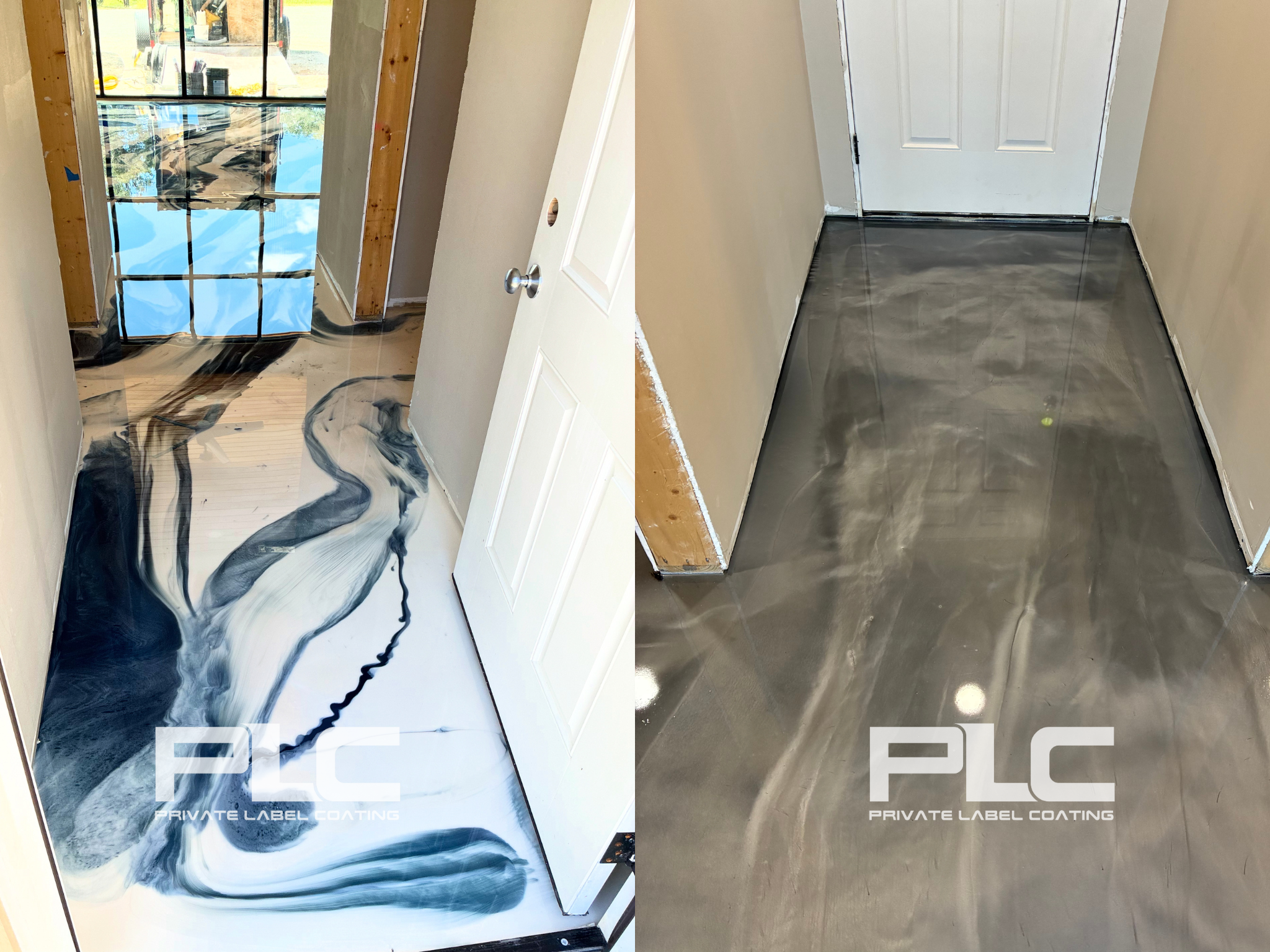
    At Private Label Coating (PLC), we believe a floor can be more than just a surface — it can be a statement. A metallic epoxy floor is exactly that — a one-of-a-kind art piece poured in place. No two floors will ever look alike, and that’s what makes them so captivating.

    The Foundation: Pigmented Primer Matters

    Every metallic floor starts with a pigmented primer coat, and that layer sets the tone — literally — for the entire project.

    The primer color is chosen based on the metallic pigment used above it. A black or charcoal primer, for example, deepens darker metallics like gunmetal, bronze, or copper, while a white or light gray primer brightens silvers, pearls, and lighter tones.

    Think of it like the underpainting of a canvas — it influences how the final colors blend, pop, and move. Choosing the right base color is one of the most important design steps, because it determines how dramatic or subtle the finished floor will appear.

    The Metallic Magic

    When the metallic epoxy is applied, the pigments move, swirl, and settle in organic patterns. The installer manipulates the material to create depth, contrast, and flow.

    If multiple metallic colors are used — say, silver, bronze, and sapphire — the design can become very “loud” or bold, with high visual contrast and fluid motion. Using one or two tones creates a more refined, elegant look.

    It’s all about the client’s vision. Some want a floor that looks like flowing lava or stormy clouds; others prefer a sleek brushed-metal aesthetic.

    Durability Beyond Beauty

    Don’t let the artistry fool you — a metallic epoxy floor is also industrial-grade tough. Once cured, it forms a seamless, chemical-resistant, and abrasion-resistant surface that can withstand heavy traffic.

    It’s a popular choice for showrooms, garages, retail spaces, and high-end homes alike because it performs as beautifully as it looks.

    Timing & Recoat Windows

    Because metallic epoxy is a multi-step system, timing is everything. Each layer — primer, metallic coat, and topcoat — has a specific recoat window, usually within 12–24 hours depending on temperature and product chemistry.

    Missing that window can cause bonding issues, so professional scheduling and controlled environments are key to achieving a flawless finish.

    What Customers Should Know

    Metallic epoxy is not for everyone — and that’s part of its appeal.

    Here are a few things to consider before diving in:

        •    Variations are natural. No two floors will ever match exactly — it’s part of the artistic process.

        •    Surface movement is unpredictable. The pigments flow differently each time, influenced by temperature, humidity, and application technique.

        •    Repairs and touch-ups can be challenging to blend perfectly due to the unique color shifts and layering.

        •    Gloss levels can vary slightly, and minor waves or visual texture are part of the handcrafted look.

    Your Custom Floor, Your Art Piece

    When you choose PLC for your metallic floor, you’re not buying a product — you’re commissioning a custom work of art built to last.

    Every pour is personal. Every swirl tells a story.

    We’ll guide you through every decision — from the pigmented primer selection to the final clear coat — ensuring your floor is both functional and unforgettable.

    Private Label Coating (PLC)

    Where Performance Meets Personality.
  • Why Every Stained Concrete Floor Looks Different — And How to Get the Look You Want

    Why Every Stained Concrete Floor Looks Different — And How to Get the Look You Want

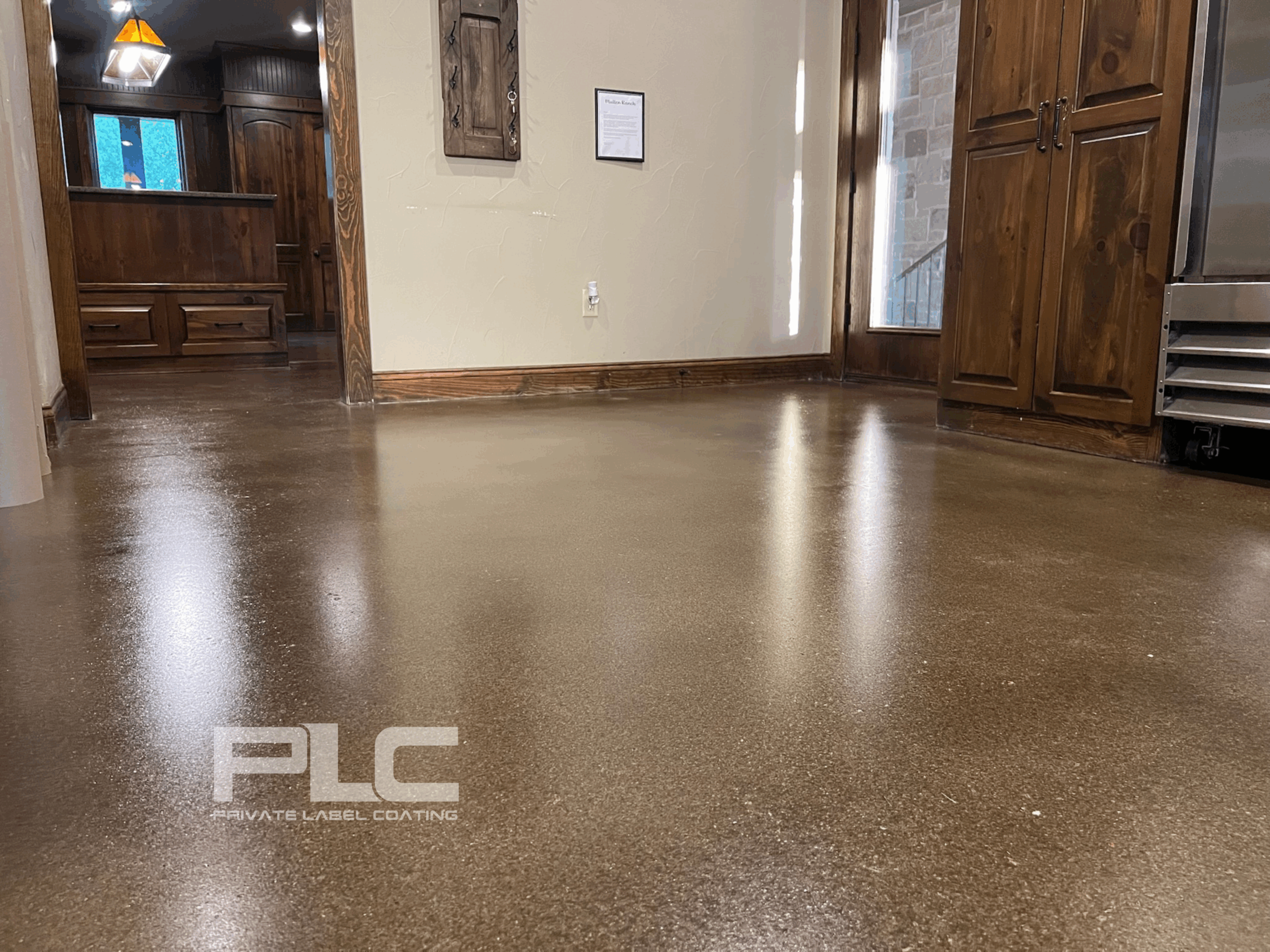
    When it comes to stained polished concrete, no two floors are ever exactly alike — and that’s part of the beauty. Stains bring depth, warmth, and character to a space, but they also interact with each concrete slab in unique ways. If you’ve ever wondered why a stain might look slightly different from a sample or project photo, the answer lies in the natural variation of concrete itself.

    At Private Label Coating, we believe in educating clients so they know what to expect and can fully appreciate the one-of-a-kind results that stained concrete delivers.

    1. The Nature of the Slab

    Concrete is never a perfectly uniform material. Its color, density, and surface texture are influenced by:

    • Mix design (cement, aggregates, and additives used)
    • Age of the concrete (newer slabs may absorb differently than older ones)
    • Moisture content at the time of staining

    All of these factors change how a stain penetrates and reacts, meaning even two floors poured on the same day can finish with slightly different tones.

    2. Porosity Plays a Big Role

    The more porous the concrete, the deeper the stain can penetrate. Dense, tightly finished slabs may take stain lightly, resulting in softer, more subtle color. On the other hand, a more open or porous surface can create richer, darker hues.

    This variation is what gives stained polished concrete its artistic, organic feel — you’ll never get a “flat” or cookie-cutter look.

    3. Surface Preparation Matters

    How the surface is prepped before staining makes a huge difference. At PLC, we carefully grind, clean, and prep the slab so it’s ready to accept stain evenly. Any residue, sealers, or imperfections left behind can block absorption in spots, which is why professional prep is essential for a clean finish.

    4. Finish Levels Change the Look

    Stained concrete comes in different sheen levels — matte, satin, or high-gloss. The high gloss, the more light reflects, and the richer and more translucent the stain appears. Matte finish levels give a softer, earthier look. 

    5. The Beauty of One-of-a-Kind Floors

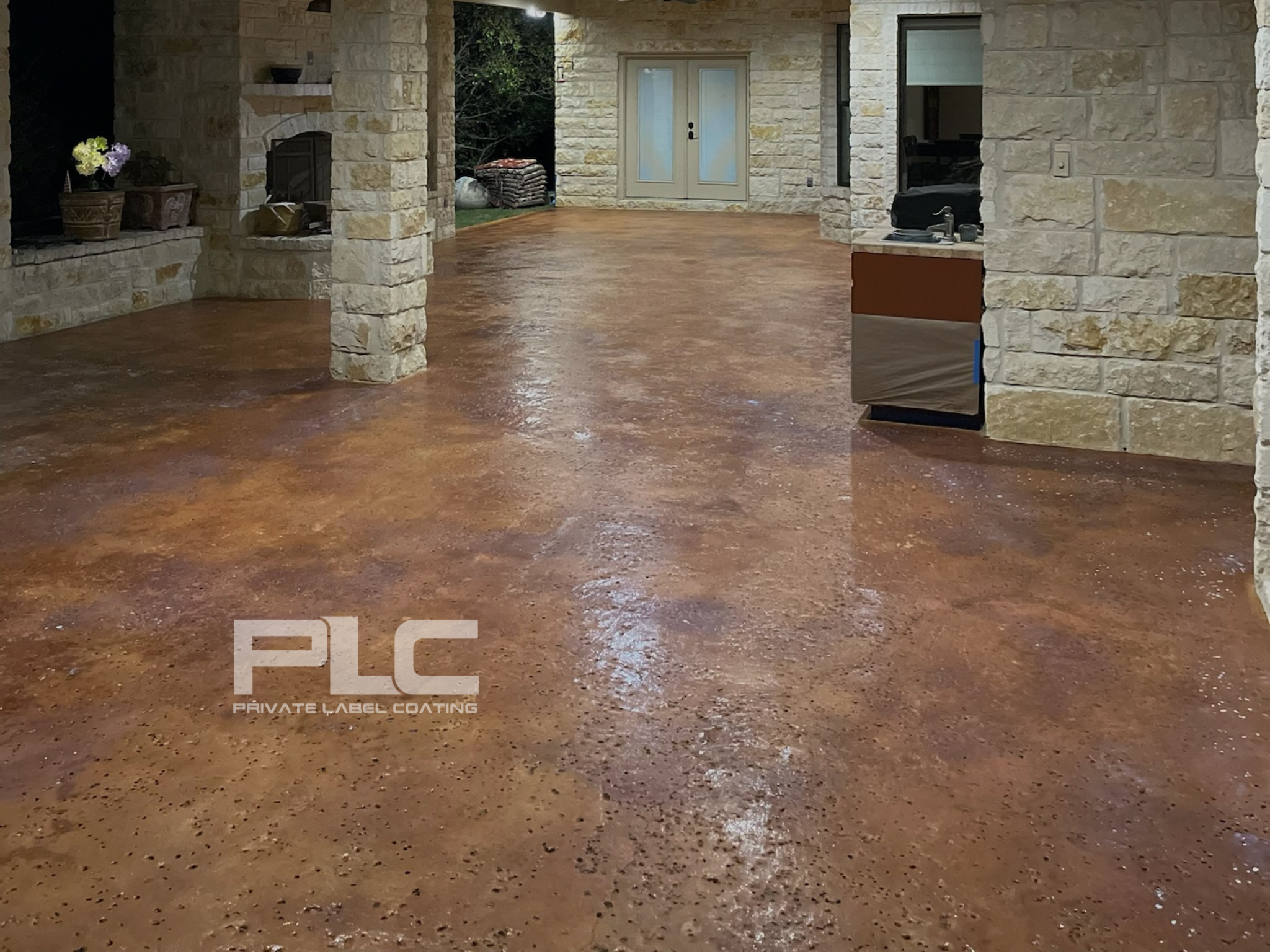
    Some people expect stain to look exactly like paint — solid and uniform. But that’s not the purpose of concrete stain. Instead, it highlights natural variation, bringing movement, depth, and character into the floor. The results are often compared to stone, leather, or marble.

    That’s why no two stained polished concrete projects will ever be identical. Each slab tells its own story.

    Stained Concrete Color Trends for 2025

    Stained polished concrete isn’t just durable — it’s stylish. Here are some of the most popular stain colors clients are requesting right now:

    • Coffee & Mocha Browns
      Rich, earthy tones that create warmth and elegance. Perfect for residential living spaces or commercial settings that want a grounded, natural look.
    • Warm Gray & Greige
      A modern favorite, blending gray with subtle brown undertones for a sleek but welcoming feel. Works beautifully in retail, office, and contemporary homes.
    • Charcoal & Black Marble Effects
      Darker stains are trending for bold, upscale designs. When polished to a high gloss, these floors can resemble luxury stone or marble.
    • Copper & Bronze Accents
      Metallic-inspired stains that catch light and bring energy to the floor. A top choice for restaurants, breweries, and boutique retail spaces.
    • Soft Sandstone & Taupe
      Neutral tones that mimic natural stone, offering timeless appeal and pairing well with any design style.
    • Deep Blue & Teal Highlights
      While more niche, these dyes/stains are growing in popularity for creative projects — adding pops of color to artistic, branded, or statement-making floors.

    Why Trust PLC for Stained Polished Concrete

    With years of experience, Private Label Coating understands how to anticipate and manage variation for stunning results. We choose the right products, prepare the surface meticulously, and communicate with clients every step of the way so the final floor is something they’ll love for decades.

    Thinking about stained polished concrete for your home or business? Contact PLC today and let’s bring out the natural beauty of your concrete.

  • Concrete Polishes 101: From Class A to the “Poor Man’s Polish”

    Concrete Polishes 101: From Class A to the “Poor Man’s Polish”

    Choosing the Right Finish for Style, Function, and Budget

    At Private Label Coating, we know that a floor isn’t just a surface — it’s a statement. When it comes to polished concrete, the finish you choose can completely transform the look and feel of a space.

    Whether you’re designing a sleek interior or upgrading a commercial environment, understanding the different types of concrete polishes can help you achieve the perfect balance of form and function.

    If you’re hearing terms like “Class A polish” or “salt and pepper finish,” this guide breaks down the most common types of concrete polishes — including a few insider terms — so you can make confident, informed decisions.


    Class A Polish – Cream Finish

    Class A is the most refined of all polish types. It preserves the very top layer of the concrete — the “cream” — resulting in a smooth, uniform finish with little to no aggregate exposure.

    This finish is ideal for high-end interiors where elegance and consistency matter. Achieving it requires expert finishing and curing during the pour, followed by light grinding. However, it’s not very forgiving — imperfections in the slab will show through.

    Best for:
    • Residential homes
    • Minimalist commercial interiors
    • Boutique retail spaces


    Class B Polish – Salt & Pepper Finish

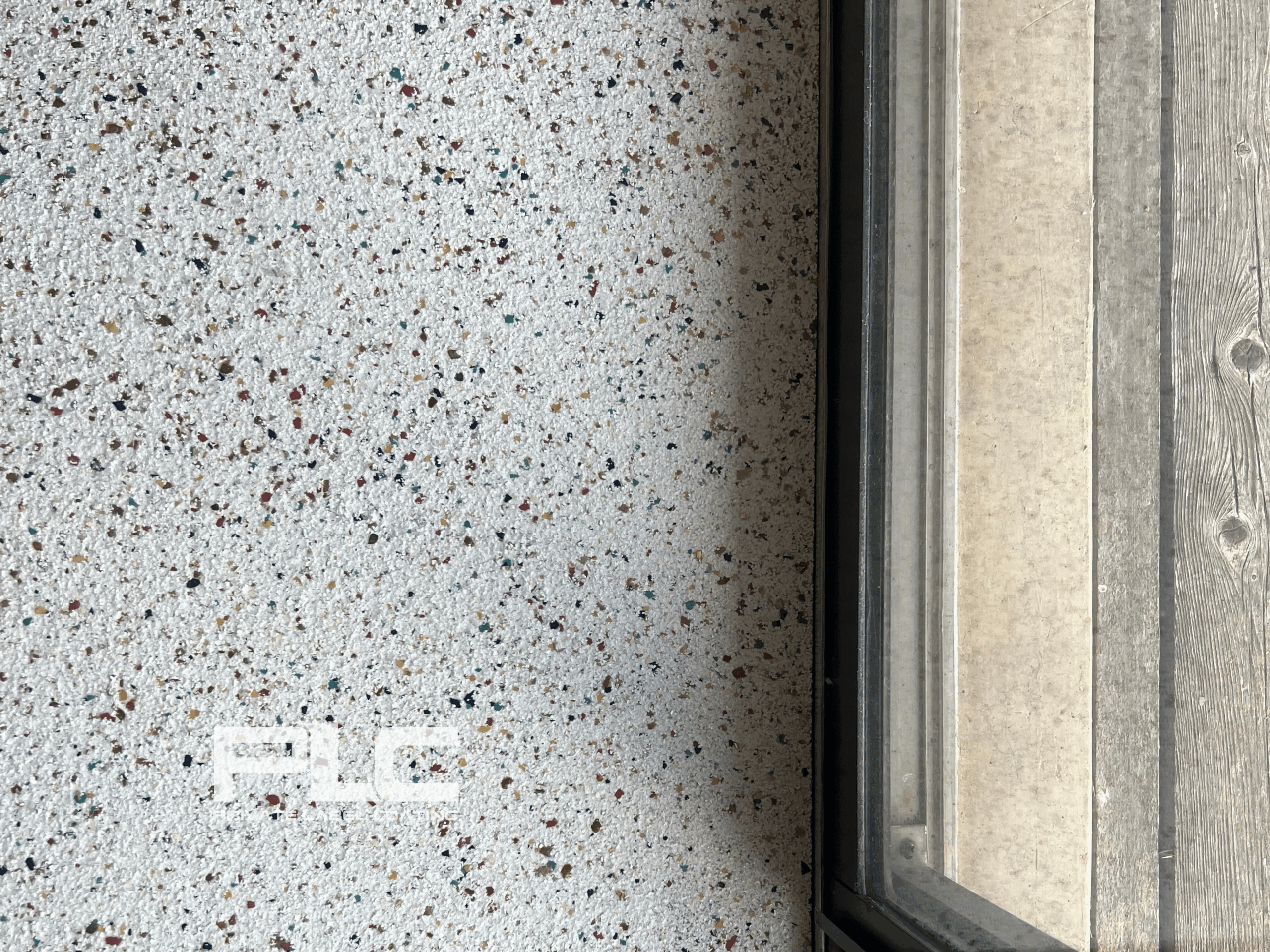
    Class B polish exposes the fine aggregate just beneath the surface, creating a speckled texture often referred to as “salt and pepper.” It’s one of the most popular finishes thanks to its subtle texture and visual depth.

    Moderate grinding is used to achieve this effect, making it more forgiving during installation and well-suited to a wide variety of project types.

    Best for:
    • Office buildings
    • Showrooms
    • Garages and cafes
    • Modern residential interiors


    Class C Polish – Large Aggregate Finish

    Class C polish reveals the larger aggregate embedded in the concrete slab. This bold, industrial-style finish is achieved through deep grinding and delivers a visually striking result with extreme durability.

    It takes more time and effort, but the payoff is a unique, stone-exposed surface that adds character and strength to any space. The aggregate distribution in concrete is not always uniform. Exposing it can result in patchy or uneven aesthetics, especially if the mix wasn’t designed with exposure in mind.

    Best for:
    • Restaurants
    • Industrial lofts
    • Statement commercial interiors
    • High-traffic environments


    The “Poor Man’s Polish” – Burnished Sealer Finish

    This budget-friendly option isn’t a true mechanical polish, but it delivers a similar sheen at a lower cost. A topical sealer (typically acrylic or urethane) is applied to the surface, then burnished with a high-speed buffer to create shine.

    While it doesn’t offer the same durability or stain resistance, it’s a quick, cost-effective solution for low-traffic or temporary spaces.

    Best for:
    • Warehouses
    • Budget-conscious projects
    • Tenant improvements
    • Utility areas and quick installs


    Choosing the Right Finish

    At Private Label Coating, we do more than install great floors — we collaborate early in the design and construction process to ensure success from the ground up. Our expert consulting services help architects, builders, and contractors make smart decisions about materials, durability, and aesthetics. Whether you’re aiming for a high-gloss industrial polish or a subtle matte finish, we guide you to the right solution and deliver it with precision.


    Let’s turn your next floor into a feature.

    Contact us today to schedule a consultation or request a quote.

  • Terrazzo-Inspired Luxury: How Bespoke Flake Combinations Forge Exquisite Floors at a Fraction of the Cost

    Terrazzo-Inspired Luxury: How Bespoke Flake Combinations Forge Exquisite Floors at a Fraction of the Cost

    Terrazzo floors have long been admired for their timeless beauty, durability, and luxurious appeal. Traditionally crafted from marble, quartz, granite, or glass chips set in cement or epoxy, terrazzo is a high-end flooring option often found in upscale homes, commercial spaces, and institutions. However, this elegance comes at a steep price, typically ranging from $25 to $75 per square foot.

    If you love the terrazzo aesthetic but need a more cost-effective alternative, custom epoxy flake flooring offers a stunning solution—delivering the same visual appeal at nearly a third of the cost.

    Why Choose Custom Flake Blends Over Traditional Terrazzo?

    1. Cost Savings Without Compromise

    One of the biggest deterrents to terrazzo flooring is its cost. Between premium materials, labor-intensive installation, and extended curing times, the investment can be significant. Custom epoxy flake floors, on the other hand, offer a high-end look at a fraction of the price—typically ranging from $5 to $15 per square foot installed.

    2. Seamless Aesthetic & Customization

    Custom flake blends allow you to recreate the speckled, multi-dimensional look of terrazzo with endless design possibilities:

    • Choose from various flake sizes to control texture and depth.
    • Mix different colors and metallic accents for a high-end terrazzo-inspired finish.
    • Opt for a high-gloss or matte topcoat to achieve your desired aesthetic.

    3. Faster Installation & Less Downtime

    Traditional terrazzo flooring requires extensive grinding, polishing, and sealing, often stretching installation times across weeks. In contrast, epoxy flake systems can be installed in as little as one to three days, depending on project size. With a faster curing time, your home or business experiences minimal disruption.

    4. Enhanced Durability & Low Maintenance

    Epoxy flake floors are designed to withstand heavy foot traffic, spills, and impacts—making them ideal for garages, showrooms, restaurants, and retail spaces. Unlike terrazzo, which can crack over time, flake flooring is more flexible and resistant to chips. Maintenance is effortless—simply sweep or mop to keep it looking pristine.

    5. Moisture & Stain Resistance

    Because epoxy coatings create a seamless, non-porous surface, flake floors naturally resist moisture, stains, and bacteria buildup. This makes them perfect for areas like kitchens, bathrooms, and commercial spaces where hygiene is a priority.

    The Future of Terrazzo-Inspired Flooring

    At Private Label Coating (PLC), we specialize in designing custom flake blends that replicate the terrazzo aesthetic while offering superior durability and affordability. Whether you prefer a classic neutral palette or a bold, high-contrast terrazzo-inspired floor, we can create a custom solution tailored to your space.

    Get the Look for Less

    Why pay three times the price for terrazzo when you can achieve the same stunning aesthetic with a custom epoxy flake system? Contact PLC today to explore your options and bring the beauty of terrazzo to your space—without the luxury price tag.

  • Why Concrete Staining Outperforms Paint Every Time (And How PLC Does It Better)

    Why Concrete Staining Outperforms Paint Every Time (And How PLC Does It Better)

    When it comes to enhancing concrete, many homeowners and property owners ask the same question: Should I paint or stain my concrete floor?

    At Private Label Coating (PLC), we strongly believe concrete staining is the superior option—and here’s why.

    Why Staining Is Better Than Painting

    While concrete paint may seem like a quick and easy solution, it often chips, peels, and fades over time, especially in high-traffic areas or outdoor spaces. Paint sits on top of the surface, offering only a temporary cosmetic improvement that’s prone to failure without constant maintenance.

    Stain, on the other hand, penetrates into the surface of the concrete, enhancing its natural beauty rather than hiding it. It’s more durable, UV-resistant, and offers a more elegant, professional finish that truly lasts.

    Pros of Stained Concrete:

    • Aesthetic Appeal: Creates a rich, natural look that enhances the concrete’s texture.
    • Durability: Because the stain penetrates the concrete, it won’t peel or chip.
    • Low Maintenance: Requires minimal upkeep beyond occasional resealing.
    • UV Resistance: Highly resistant to fading from sunlight.

    Cons of Painted Concrete:

    • Peeling and Chipping: Since paint sits on the surface, it can peel, chip, or wear away over time, especially in high-traffic areas.
    • Higher Maintenance: Requires more frequent touch-ups and reapplications compared to stains.
    • Moisture Sensitivity: If the concrete is not properly sealed, moisture can cause the paint to bubble or flake.
    • Slippery When Wet: Some painted surfaces can become slick, though anti-slip additives can help mitigate this issue.

    Due to these issues, PLC chooses to only offer stained concrete, ensuring a long-lasting, high-quality finish.

    Why PLC Chooses ColorFusion Stains Over Acid Stains

    While acid stains have been used for decades, they come with some major drawbacks: limited color selection, unpredictable chemical reactions, and more difficult cleanup.

    At PLC, we prefer the modern solution—ColorFusion Stains.

    • More Vibrant and Controlled Color Options
    • Consistent Results Without Harsh Chemical Reactions
    • Environmentally Friendly and Safer Application
    • Faster Dry Times and Easier Maintenance

    ColorFusion Stains allow us to achieve richer, more uniform tones while still showcasing the natural character of your concrete slab.

    The Staining Process: Craftsmanship Matters

    One of the most important steps in staining is proper surface prep. At PLC, we never cut corners.

    1. Surface Preparation: We start by mechanically profiling the concrete to remove dirt, sealers, or old coatings that could interfere with stain penetration. This ensures maximum bond strength and consistent color absorption.
    2. Repairing Imperfections: Any cracks or holes are patched with a concrete filler to ensure a smooth surface.
    3. Applying the Stain: Using our advanced spray application technique, we evenly apply ColorFusion Stains to create seamless, natural transitions and rich color depth.
    4. Sealing the Surface: Once the stain is applied and cured, we apply a premium concrete sealer to protect and enhance the final finish.

    Pro Tip: Stains are semi-translucent, meaning they highlight rather than hide imperfections. Cracks, patchwork, or stains on the concrete may still show through. That’s why we take extra care to prep your surface correctly and set realistic expectations upfront.

    Choose Your Finish: Matte, Satin, or Gloss

    Once your stain is applied and cured, the final step is sealing—and this is where you get to choose your finish style:

    • Matte Finish: A soft, natural look with minimal reflection. Great for subtle elegance.
    • Satin Finish: A popular balance between natural and polished. Slight sheen, easy maintenance.
    • Gloss Finish: High-impact shine for bold, rich color enhancement and wow-factor.

    Each sealer provides excellent protection, but your finish choice will influence how the stain color appears under light and how the floor feels underfoot.

    Stained Concrete Is an Investment in Style and Durability

    Concrete staining isn’t just a coating—it’s a custom design element that enhances your space from the ground up. With proper prep, high-performance stains, and quality sealers, your stained floor will stand the test of time while offering unique character that can’t be replicated by paint or tile.

    At PLC, we take pride in delivering top-tier finishes with expert craftsmanship and modern materials that outperform traditional methods.

    Ready to Transform Your Floor?
    Contact Private Label Coating today for a free consultation and color sample review.
    Let us help you choose the right stain system and sealer for your project—and bring your concrete to life.

    Because good floors aren’t just covered—they’re crafted.

    Contact Us Today

    Bryan: (830) 928-1945

    bryan.fuelexpert@gmail.com